
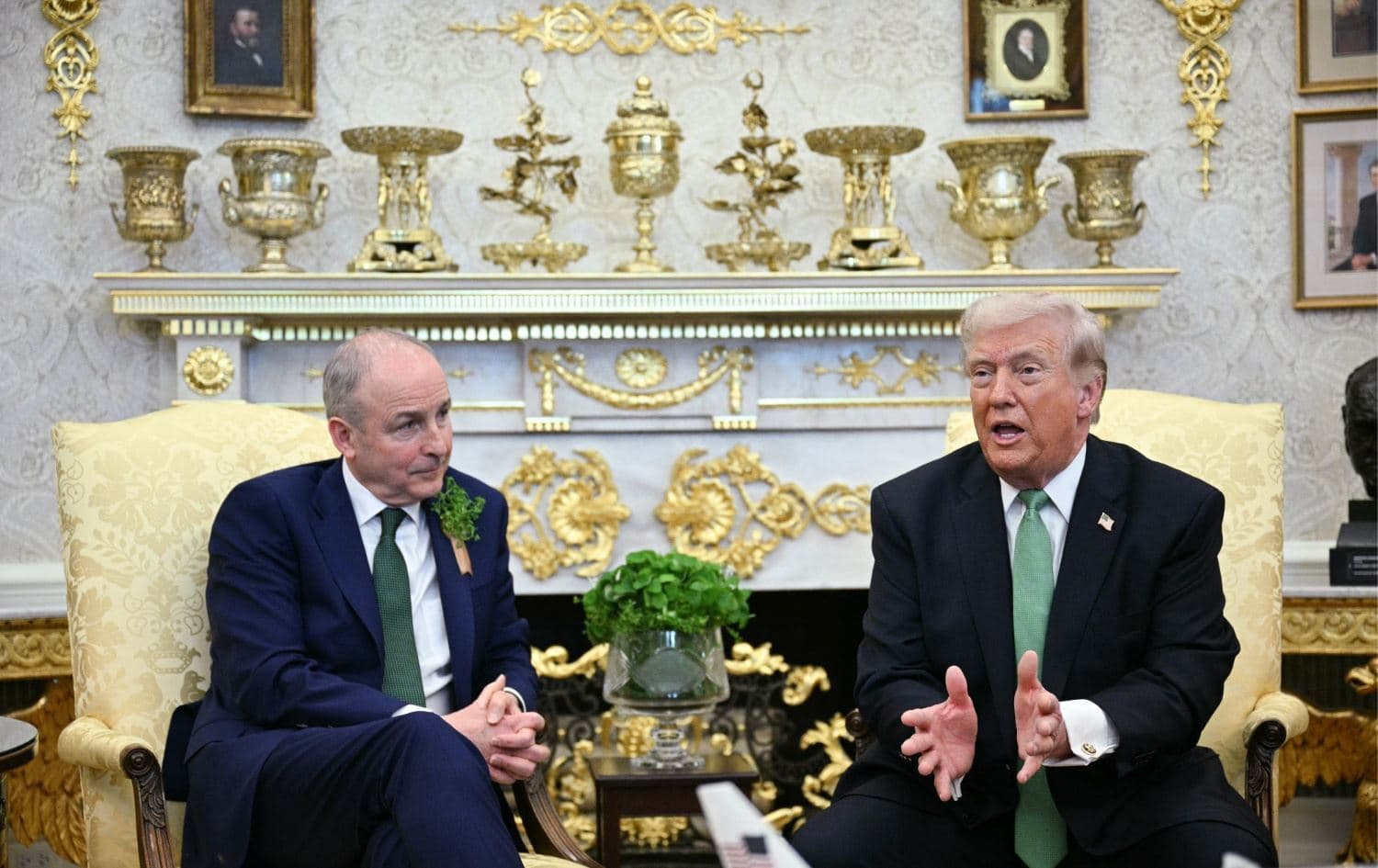
WASHINGTON DC - US President Donald Trump on Tuesday criticized NATO nations for their lack of support in the US campaign against Iran, telling Rudaw that support from Middle Eastern countries, by contrast, has been great. Trump and his Vice President JD Vance also censured the repeated attacks by Iran-aligned armed groups in Iraq on the US diplomatic mission, saying the incidents underscore the presence of “a lot of terrorists” who must be eliminated.
Asked by Rudaw about reactions from different countries, including NATO allies, to his proposal for a coalition to secure maritime traffic through the Strait of Hormuz, Trump said, “Well, we've had great support from the Middle East,” naming Gulf Arab states - including Bahrain, Qatar, the United Arab Emirates (UAE), and Saudi Arabia - along with Israel, as countries that “have been very strong in their support.”
Trump added however that he was “very disappointed in NATO,” noting, “We've spent trillions of dollars on NATO over the years… and when they don't help us, it is definitely something we should think about.”
He further called NATO nations “very foolish” for expressing concern about Iran as a threat while refusing to assist in securing the Strait of Hormuz, saying, “It is not good for a partnership when they say what you’re doing is a great thing, but we’re not going to help.”
The US and Israel on February 28 launched a joint campaign against Iran, with the US Central Command (CENTCOM) announcing in its latest tally on Tuesday that the operation, dubbed Operation Epic Fury, had targeted more than 7,000 sites across Iran since its start with the stated aim of dismantling Iran’s security structure.
In response, Iran earlier this month said it launched more than 2,000 drones and over 600 missiles targeting US and Israeli positions in the region, especially in Gulf Arab states, as part of its multi-front response, titled Operation True Promise 4.
Tehran has also tightened its grip on the vital Strait of Hormuz, effectively closing it to commercial traffic. The strait handles roughly 20 percent of global seaborne oil trade, and its closure has caused regional oil disruptions, driving global prices up 40 to 50 percent.
European foreign ministers on Monday discussed the Iran war in Brussels, but showed “no appetite” for Trump’s proposal for a coalition to help reopen Hormuz.
Following the Foreign Affairs Council meeting, Kaja Kallas, the European Union’s foreign policy chief, was asked about extending Operation Aspides - an EU naval mission launched in early 2024 to protect commercial shipping in the Red Sea, Gulf of Aden, and Bab al-Mandab Strait - to the Strait of Hormuz.