
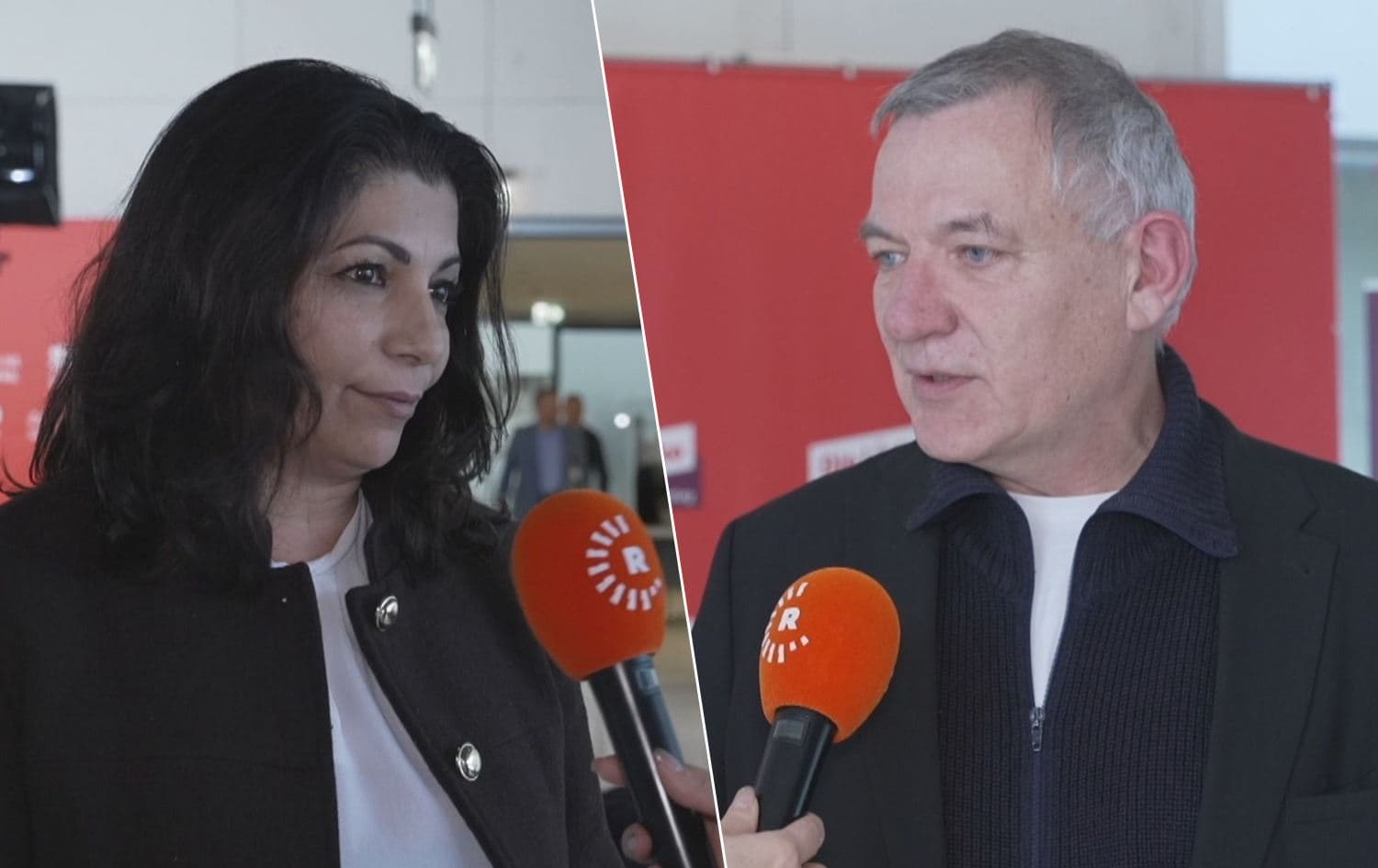
ERBIL, Kurdistan Region - The co-chair of Germany’s Left Party on Friday accused Berlin and the European Union of failing to clearly condemn attacks by Syria’s interim government on Aleppo’s Kurdish-majority neighborhoods, warning that continued political and financial support should be conditioned on protecting minorities and ending the violence.
“It is necessary to condemn these attacks that [interim Syrian President Ahmed] al-Sharaa's government is now carrying out in Aleppo against the Kurds,” Jan van Aken, co-chair of the Left Party, told Rudaw.
Clashes between Damascus-affiliated forces and Kurdish-led internal security forces (Asayish) have destroyed hundreds of homes in Aleppo’s Kurdish-majority Sheikh Maqsood and Ashrafiyeh neighborhoods in recent days, displacing thousands, with tens reported killed. A brief ceasefire collapsed on Friday as Damascus-affiliated forces sought to expel Kurdish fighters from the city and transfer them to northeast Syria (Rojava). The local council administering the neighborhoods rejected the proposal, saying they would remain there and “defend” the neighborhoods. The Asayish later said Sheikh Maqsood was under “violent and intensive bombardment” by Damascus-affiliated factions.
“Undoubtedly, this is a crime, not only a crime against humanity, but also a crime against Syrian laws,” van Aken said. “The people of Aleppo and [northeast Syria] Rojava should know that we, as the Left Party in Germany, are with them. I myself have been there several times. We sympathize with you,” he said.
“We must clearly condemn this from Germany and from Europe. I expect this from my country's chancellor, and I also expect it from Ursula von der Leyen, who is now in Syria. One cannot accept these attacks,” he added.
European Commission President Ursula von der Leyen met Syria’s Sharaa in Damascus on Friday, saying in a post on X that “Europe will do everything it can to support Syria’s recovery and reconstruction.”
She announced that the EU intends to provide around 620 million euros in financial support “this year and next.” The package includes humanitarian aid, early recovery assistance, and “bilateral support.” She said the funding is “necessary” to help Damascus “restore the essential services for the population and to rebuild the state institutions.”
“We would like Syrians to have a real prospect of coming back home and rebuilding their lives here,” von der Leyen said.
Germany has recently increased deportations, drawing criticism from opposition and leftist parties over potential human rights violations. In November, German Chancellor Friedrich Merz said Syrians could face expulsion, stating that “there are now no longer any grounds for asylum in Germany, and therefore we can also begin with repatriations.”
“My fear is that the German government and Europe will say ‘we will act as if the new Syrian government is very good and there is peace in Syria, so that we can deport many people back.’ This is the real reason for Merz's silence. This, in my opinion, is cowardly and hypocritical,” van Aken said.
He added that Germany and Europe should make clear to the transitional government under Sharaa that “this is not acceptable and you will not be supported if you continue killing minorities.”
EU and German officials have repeatedly said they are tying aid to the government’s ability to protect all social, ethnic, and religious groups - including Christians, Alawites, and Kurds - and to prevent violence while transitioning toward a stable and inclusive government that would eventually lead to free and democratic elections.
“There is fighting there now. There is a war going on there. No one should be returned there at this time,” Von Akend added.
Derya Turk-Nachbaur, a lawmaker from Germany’s Social Democratic Party (SPD), said they are “monitoring this situation with concern. We see thousands of people fleeing, leaving Aleppo, and the people are suffering. This is a source of great concern for us.”
Asked about her party’s position, Turk-Nachbaur said it has taken a clear stance.
“We, as a faction, condemn it; we have done this in many places. It is necessary to protect or strengthen the foundations of the state so that democracy emerges there,” she said.