ERBIL, Kurdistan Region - The green coverage rate in the Kurdistan Region has increased by five percent over the past five years, the Erbil parks engineering department said on Wednesday, stressing the rise reflects greater government focus on tackling climate change.
Sarwar Waysi, head of Erbil’s parks engineering department, told Rudaw on Wednesday that, based on a directive from the municipalities and tourism ministry, and in coordination with the Aynda Organization for Environmental Protection, they carried out a comprehensive assessment of the Region’s total green coverage. “It was revealed that in the period of five years, it has reached more than 20 percent,” he said.
A previous survey conducted in 2015 showed the overall green coverage in the Kurdistan Region was 12.44 percent.
In Erbil, green coverage has grown from 9.1 percent in 2015 to 19.8 percent. Sulaimani province has increased its coverage from 9.1 to 19.6 percent, with 13 square meters of green space per person. Duhok now stands at 27 percent, up from 12 percent in 2015, and Halabja’s rate has increased from ten percent to over 15 percent.
Erbil’s parks department also plans to establish a large green belt around the capital, planting millions of pistachio and olive trees, according to Waysi.
The efforts come as Erbil struggles with one of the highest levels of air pollution in Iraq, driven by smoke from power generators, heavy car emissions using low-quality fuel, and frequent dust storms.
Iraq is among the countries most vulnerable to climate change, with poor water resource management and dam construction in neighboring countries contributing to dwindling river flows.
Solin Hamdamin contributed to this article.
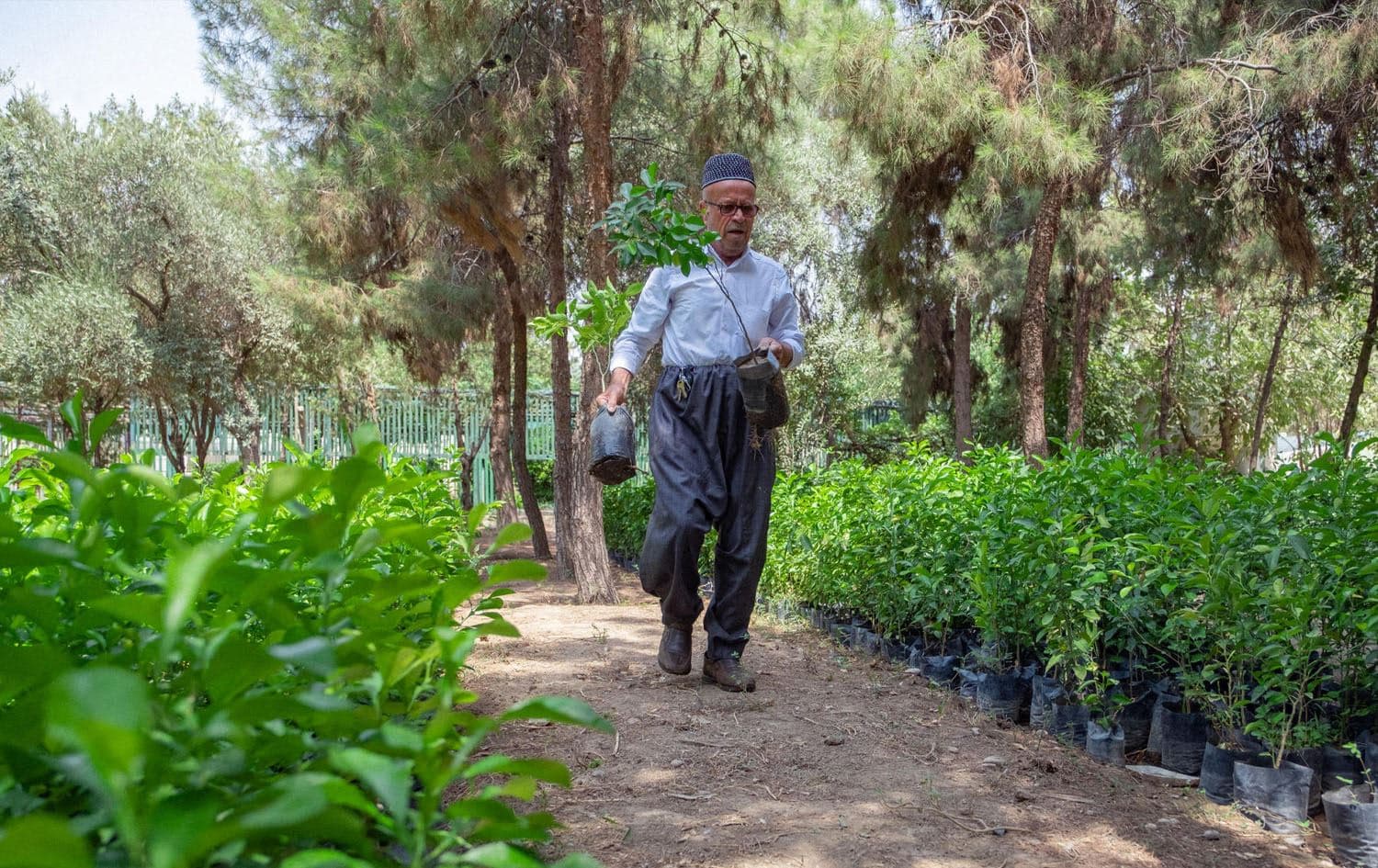
A Kurdish man carrying orange tree saplings in a nursery in Erbil on July 30, 2025. Photo: Bilind T. Abdullah/Rudaw
KurdistanJuly 31, 2025
Kurdistan Region sees five percent rise in greenery: Official
2:35
Related Articles
Kurdistan05-08-2025
Kurdish socialist party accuses Halabja security of arresting its Peshmerga
Kurdistan05-08-2025
Drone attacks cut Kurdistan oil output by 100,000 barrels per day
SuggestedQuestions