ERBIL, Kurdistan Region - Iran’s judiciary on Tuesday said that 75 inmates escaped from the notorious Evin prison in Tehran following a deadly Israeli strike during the war between the arch-rivals, with 27 escapees remaining at large.
An Israeli strike on the Evin prison complex during the 12-day war killed 79 people and destroyed a part of the prison’s administrative building. The strike came as part of a bombardment campaign by Israel on Iranian soil that began on June 13 and triggered mass retaliation from the Islamic republic.
Judiciary spokesperson Asghar Jahangir said that 75 prisoners escaped the facility in the aftermath of the strike, with 48 later returning or being captured by authorities, with efforts to re-arrest the remaining escapees ongoing.
The victims of the June 23 strike included “administrative staff, conscripts, prisoners, families of prisoners who had come to visit or follow up on legal cases, and nearby residents,” according to Jahangir.
Israel struck the prison facility following Iran’s execution of a man accused of spying for Israel, with Foreign Minister Gideon Saar stating at the time that the attack on Evin was intended to deter Iran’s executions.
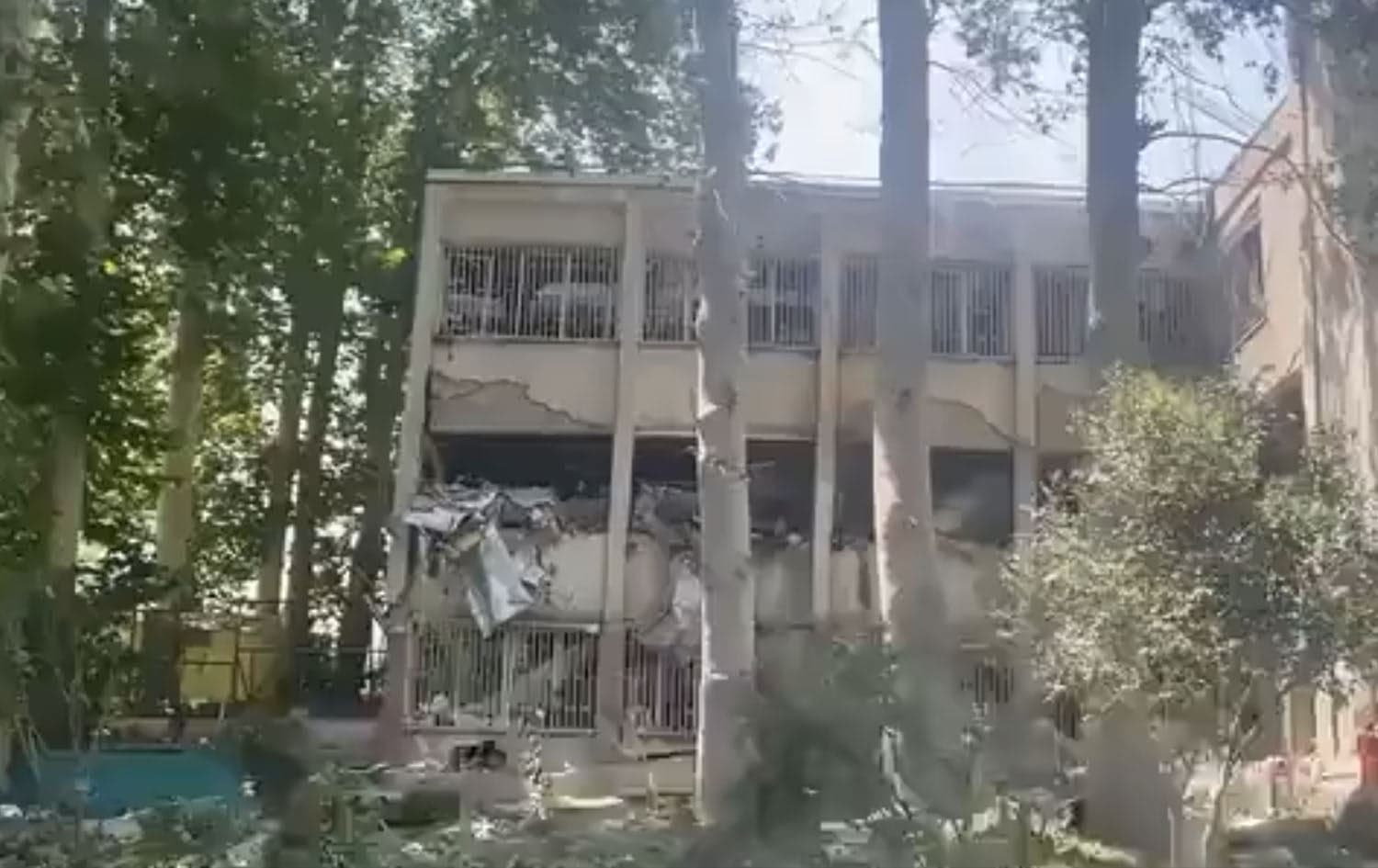
Footage shows damage to the Evin prison complex in northwestern Tehran on June 24, 2025. Photo: Fars news agency
Iran says 75 escaped from notorious Tehran prison after Israeli attack
Related Articles
Kurdish street musicians face growing pressure from Iranian authorities
Iran executes 96 prisoners in July: Watchdog
On Tuesday, Amnesty International called for a war crimes probe into Israel’s strike on the prison, labeling the attack “deliberate” and “a serious violation of international humanitarian law.”
Established in 1972, Evin Prison in northwestern Tehran has long been a symbol of political repression in Iran. The facility is known for holding political prisoners, journalists, student activists, and foreign nationals.
It has been widely condemned by human rights organizations for systematic abuse, including alleged torture and the use of dual nationals as leverage in international negotiations.
During the 12-day war, the head of Iran’s judiciary said that suspects accused of collaborating with Israel in its war will face expedited trials and be given no leniency.
Iran has released several confessions of people accused of cooperating with or spying for Israel. Such confessions are widely believed to be coerced, often obtained through threats, psychological pressure, and, in some cases, physical torture.